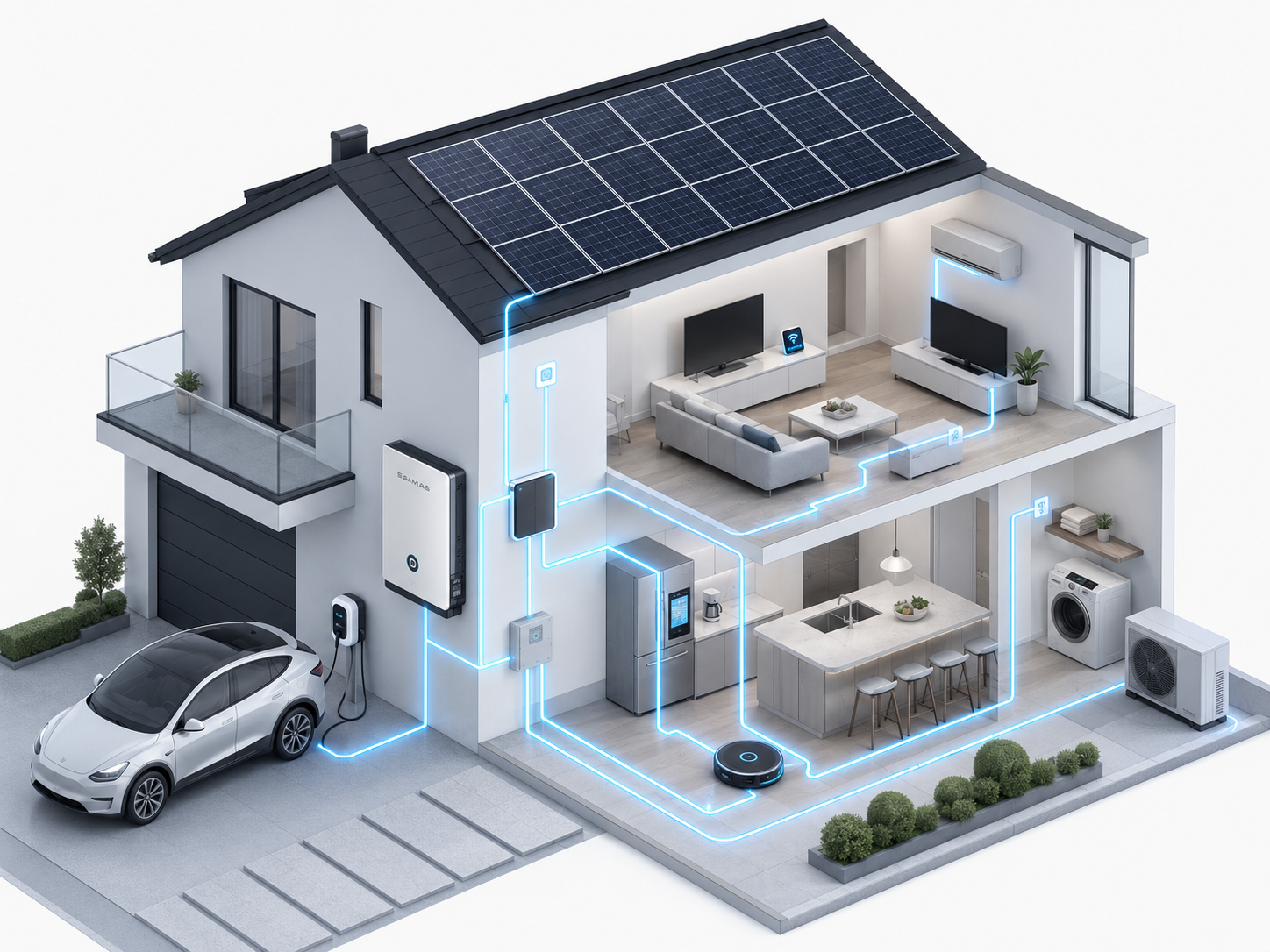
Rising electricity costs, grid instability, and growing sustainability requirements are changing how businesses manage energy. Factories, industrial parks, commercial buildings, data centers, farms, and renewable energy projects all need reliable power while keeping operating costs under control.
Commercial and industrial energy storage solutions allow businesses to store electricity and use it when demand, electricity prices, or operational risks are higher. By combining battery storage with intelligent energy management, companies can reduce peak demand, improve renewable energy utilization, and maintain critical operations during grid interruptions.
SAMAS provides commercial and industrial energy storage systems for factories, commercial facilities, renewable energy projects, agricultural operations, and other organizations requiring flexible power management.
A commercial and industrial energy storage system is a battery-based solution that stores electricity for later use. Depending on the project, the system may charge from the utility grid, solar panels, wind power, or a combination of energy sources.
A typical system includes:
Battery modules for storing energy
A battery management system for monitoring battery operation
A power conversion system for managing AC and DC electricity
An energy management system for controlling charging and discharging
Thermal management and safety protection components
Together, these components allow businesses to decide when electricity should be stored and when it should be supplied to facility loads.
Unlike a conventional generator, a battery energy storage system (BESS) can also participate in daily energy management instead of remaining idle until an emergency occurs.
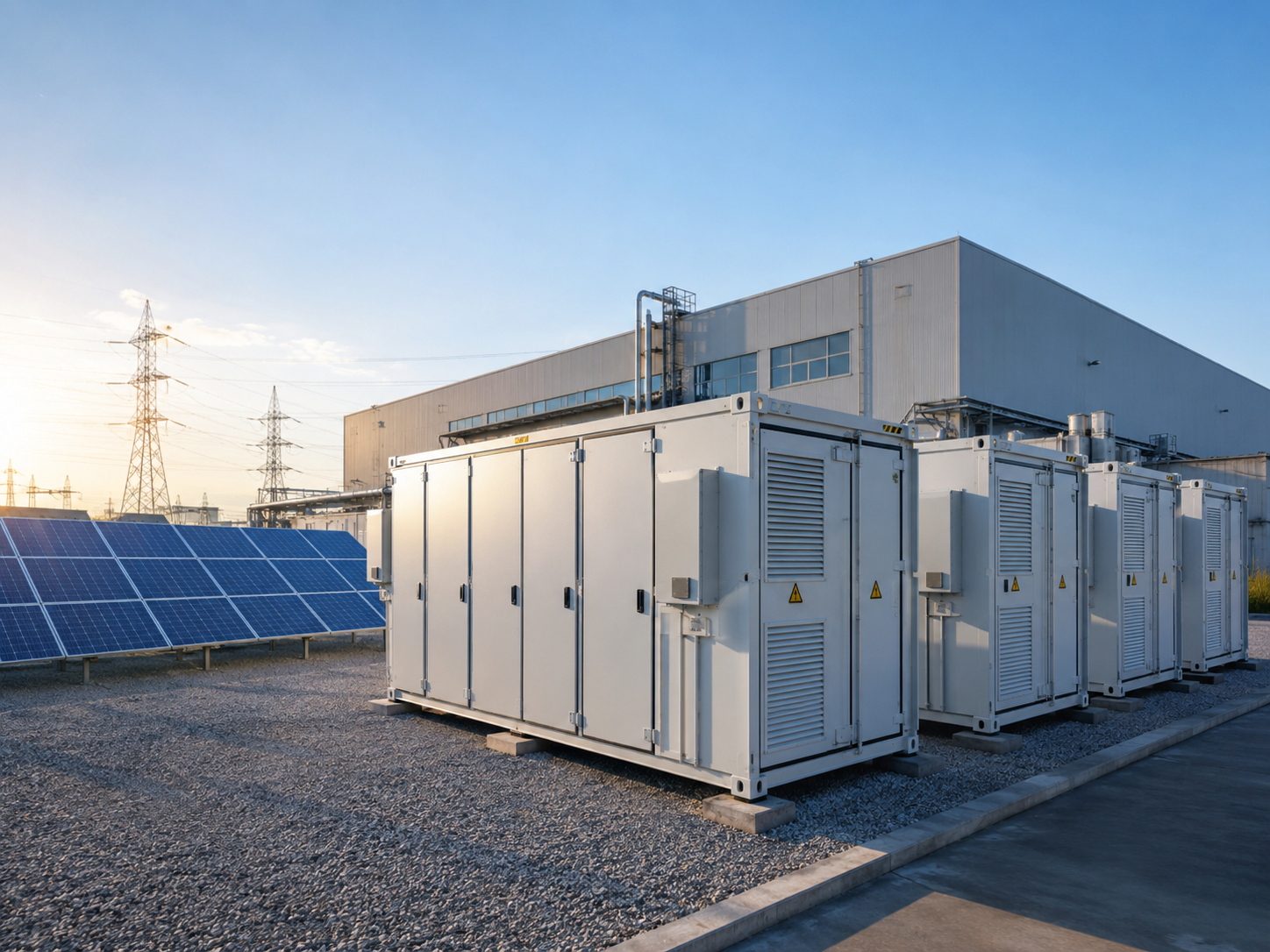
The potential savings depend on local electricity tariffs, facility load profiles, system capacity, and operating strategy. In suitable applications, an industrial energy storage system can reduce energy costs in several ways.
Many commercial and industrial users pay demand charges based on their highest electricity consumption during a billing period.
A battery system can discharge when facility demand approaches a set limit. This reduces the peak power purchased from the grid and may lower demand-related charges.
Peak shaving is especially relevant for facilities with:
Large motors or production equipment
EV charging stations
Cooling and refrigeration loads
Short periods of unusually high demand
Multiple machines starting at similar times
Where electricity prices vary by time of day, batteries can charge during lower-priced periods and discharge when grid electricity becomes more expensive.
This load-shifting strategy allows businesses to control when they purchase electricity without significantly changing production schedules.
Solar systems may generate more electricity than a facility can immediately consume during the day. Without storage, some of this energy may be exported or curtailed.
A commercial solar battery storage system can store excess solar electricity and release it later when solar output decreases or facility demand increases. This helps improve on-site renewable energy utilization and reduce dependence on grid power.
Even a short power interruption can stop production lines, disrupt data systems, affect refrigeration, or delay customer orders.
A properly designed battery energy storage system can provide fast-response power when the grid becomes unstable or unavailable. Depending on the system configuration, it may support:
Production controls and automation systems
Communication and data equipment
Lighting and security systems
Refrigeration and cold storage
Pumps and selected industrial equipment
Other designated critical loads
Energy storage does not automatically mean that every load in a facility will remain operational. The backup scope must be defined during system design according to critical load power, startup demand, required operating time, and available battery capacity.
For projects requiring a complete technical assessment, SAMAS provides battery energy storage system design support for solar, wind, and commercial or industrial applications.
Manufacturing facilities often have fluctuating loads caused by machinery, motors, compressors, heating equipment, and automated production lines.
An industrial battery backup system can help manage peak demand, support critical production equipment, and improve power stability during grid fluctuations.
Hotels, offices, shopping centers, hospitals, schools, and other commercial facilities can use battery storage for peak shaving, solar energy utilization, and backup power.
The system can be configured to prioritize important loads such as lighting, elevators, communication equipment, security systems, or refrigeration.
Farms and agro-processing businesses may require reliable electricity for irrigation, ventilation, cold storage, water pumping, and processing equipment.
When combined with solar generation, battery storage can reduce diesel use and improve power availability in remote or grid-constrained locations.
Solar and wind generation varies with weather and operating conditions. Energy storage can absorb excess generation and release it when renewable output falls or electricity demand increases.
This helps smooth energy supply and provides greater flexibility for grid-connected and off-grid renewable energy projects.
High-power EV chargers can create sharp demand peaks, particularly when several vehicles charge simultaneously.
Battery storage can supplement grid power during high-demand periods and help charging-site operators reduce the need for immediate electrical infrastructure upgrades.
System selection should begin with a review of the facility’s actual electricity data rather than choosing a battery based only on advertised capacity.
Collect interval electricity data to identify:
Daily energy consumption
Peak demand periods
Seasonal load changes
Critical equipment
Solar generation and export patterns
Planned future expansion
This information helps determine whether the main objective should be peak shaving, backup power, renewable energy integration, or a combination of functions.
Power and energy are different.
Power, measured in kilowatts, determines how much equipment the system can support at one time. Energy capacity, measured in kilowatt-hours, affects how long the system can support that load.
Both values must be matched to the facility’s operating requirements.
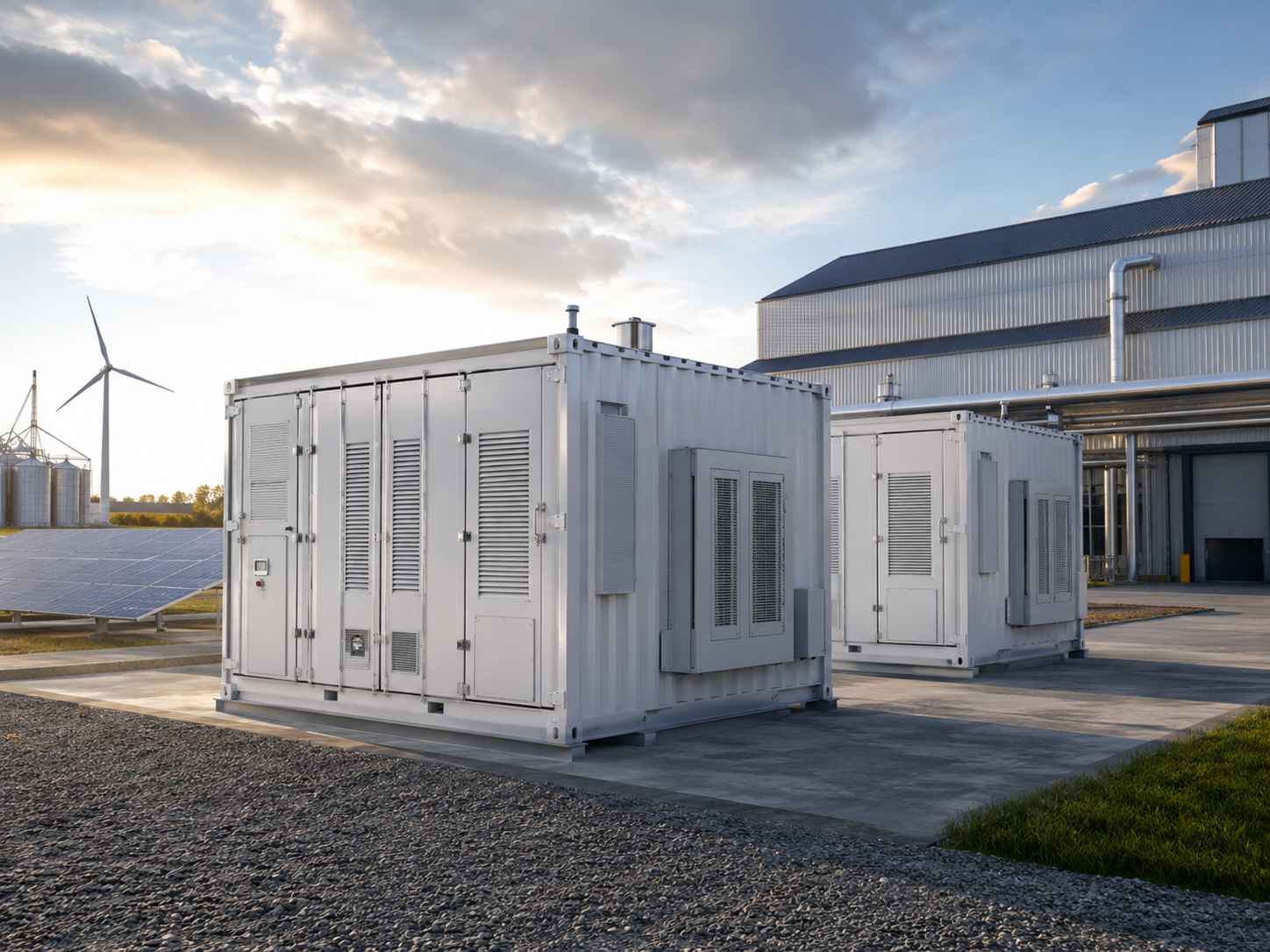
Compact outdoor cabinets may suit projects with limited space or moderate capacity requirements. Larger industrial sites may require scalable containerized systems.
For projects that need an integrated, compact C&I configuration, the SAMAS liquid-cooled containerized ESS combines battery storage, power conversion, thermal management, and system controls in one solution.
A commercial battery system should include appropriate battery monitoring, temperature control, electrical protection, fault detection, and fire protection according to the project requirements and applicable local standards.
The energy management system should also support the intended operating strategy, such as peak shaving, time-of-use control, solar self-consumption, or backup power.
Business energy demand may increase as production expands, new equipment is installed, or EV charging is added.
A modular design can allow additional capacity to be introduced in phases. Larger projects may consider a scalable container energy storage system where higher power and energy capacity are required.
Battery storage and diesel generators serve different purposes, and some projects may use both.
| Factor | Battery Energy Storage | Diesel Generator |
|---|---|---|
| Response | Fast electrical response | Requires engine startup |
| Daily energy management | Supports peak shaving and load shifting | Normally used for backup |
| Fuel | No fuel consumed during discharge | Requires fuel supply |
| Noise | Relatively quiet | Produces engine noise |
| On-site emissions | No direct emissions during discharge | Produces exhaust emissions |
| Solar integration | Can store excess solar energy | Does not store renewable electricity |
| Runtime | Limited by battery capacity | Limited by available fuel |
The correct configuration depends on the facility’s load, outage duration, operating environment, and reliability requirements. Battery storage may replace a generator in some applications or work alongside one as part of a hybrid power system.
Selecting an energy storage partner involves more than comparing battery capacity and price. Businesses should also evaluate system design, application engineering, safety configuration, integration capability, technical support, and future scalability.
SAMAS works with commercial and industrial customers to match energy storage configurations with actual site conditions and business objectives. Available solutions include integrated PV-storage equipment, outdoor battery cabinets, liquid-cooled systems, and larger containerized energy storage systems.
By considering the facility load profile, available installation space, renewable energy resources, backup requirements, and expansion plans, SAMAS can help customers develop a more practical and reliable energy storage solution.
Commercial and industrial energy storage solutions can help businesses reduce peak electricity demand, improve solar energy utilization, maintain critical loads, and build more flexible power infrastructure.
The most suitable system depends on how the facility consumes electricity, which loads require backup, how long backup power is needed, and whether future expansion is expected.
With appropriate system sizing and control strategies, a commercial energy storage system can become an active energy-management asset rather than simply an emergency battery. Businesses planning a new project can contact SAMAS to discuss site loads, system capacity, installation conditions, and project-specific energy objectives.